
No Smith County 72-Hour List
The official source sweep found no Smith County Sheriff page labeled “72-hour release list,” “recent releases,” or “released inmates.” The Smith County public portal combines jail and court access, and the Sheriff points users to Odyssey Public Access. Neither source states that it provides a rolling three-day release window. No official refresh cadence, released-booking retention period, or photo-persistence rule was located.
A date filter may appear in a live dynamic interface, but that is not enough to call the results an official 72-hour feed. Interface controls can change, and a date field may filter court filings, booking activity, or another event rather than completed releases. Record the exact field label and search date. Then verify the resulting entry with the custody record.
Check Smith County Three-Day Releases
A three-day check works best when it starts with a defined period and one person. Write down the beginning and ending date and time. Use exact identifiers wherever possible because names collide, and do not merge separate bookings into one event.
- Search the Smith County portal and Odyssey for the full name, booking number, or case number. Note when the search was run.
- Open the criminal case and identify the court. Look for bond, dismissal, judgment, sentence, commitment, or another order affecting custody.
- Call 903-590-2800 and ask whether the person booked out within the chosen interval, transferred, moved within the county system, or remains confined.
- Submit a direct Smith County request for book-in and book-out times, release disposition, and transfer destination.
- Follow any transfer into the receiving system. TDCJ, BOP, ICE, and another county each maintain separate custody records.
The court docket can explain legal authority but does not establish the physical exit time. A bond order may precede jail processing, and a dismissed charge may coexist with another hold. The jail's book-out entry answers when that booking ended and how. For a same-day interval, use the Released Last 24 Hours workflow.
Smith County 72-Hour Record Fields
The public interface did not render reliably enough to verify a fixed list of displayed fields. The following inventory belongs in a precise records request. It describes what the desired release record should answer, not what Smith County promises to publish online.
| Requested field | Reason to obtain it |
|---|---|
| Name, aliases, booking number | Matches the event to the intended booking. |
| Book-in timestamp | Separates a new booking from an older case. |
| Book-out date and time | Places the custody exit inside or outside the 72-hour interval. |
| Housing facility | Identifies the Smith County jail component tied to the event. |
| Charges and holding agencies | Shows whether another matter could continue custody. |
| Release disposition | States bond, time served, dismissal, transfer, or another recorded basis. |
| Receiving agency or destination | Distinguishes community release from continuing custody. |
Potential portal fields and booking photos were not verified, so they should not be inferred from commercial mirrors. If a booking photograph is needed, request it as a separate item tied to the booking number and date. The county's online criminal index coverage from 1995 applies to court records. It is not a retention promise for released jail bookings.
Smith County Jail-Court Data Quirk
Smith County's combined portal is useful because a court case may remain after a short jail record is no longer easy to find. Yet the two record types serve different custodians and purposes. Felony court records belong with the District Clerk. Misdemeanor criminal records belong with the County Clerk. A judicial entry may explain the order behind release while leaving the exact jail processing time unstated.
The approved capture of the official Smith County portal shows the combined access point.
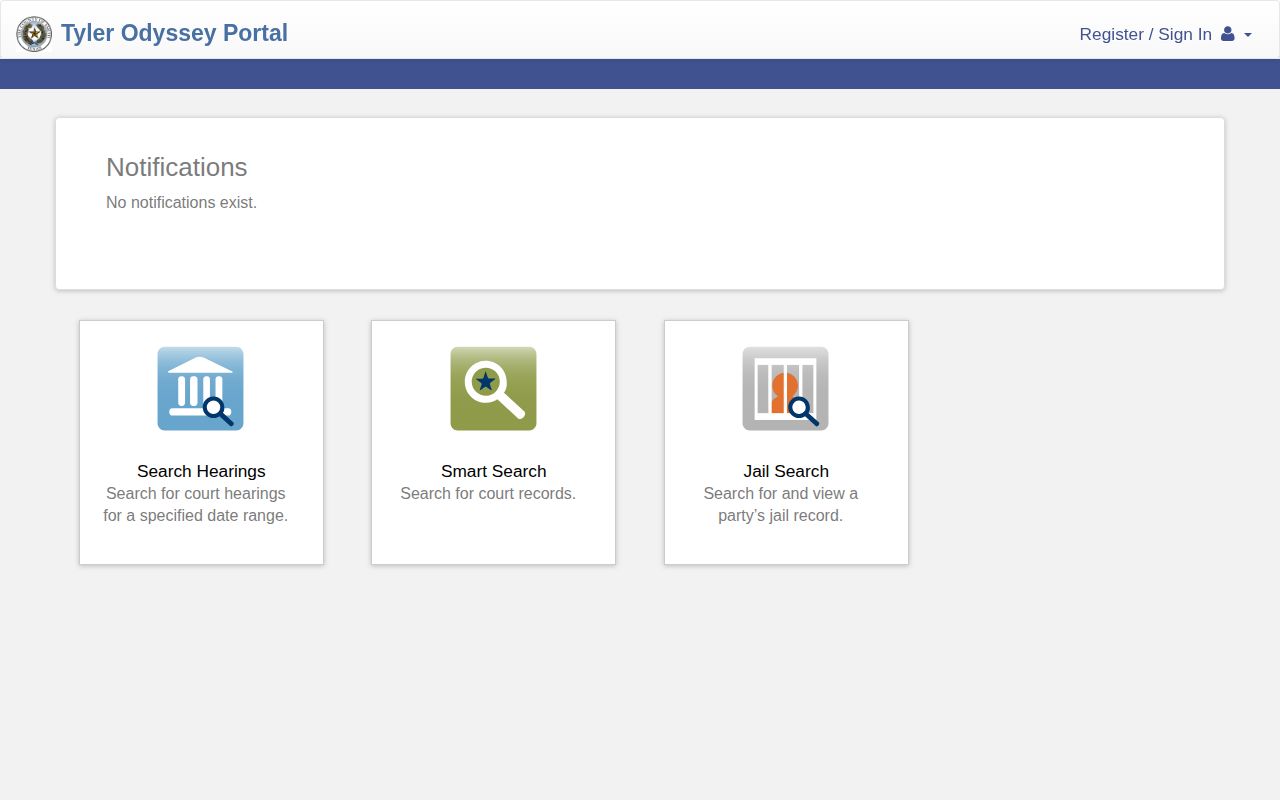
Save the booking or case identifier from the portal, then use it in the call or written request. This connection is more reliable than assuming the absence of a current roster entry proves a release during the weekend.
Smith County Weekend Release Checks
A 72-hour span can bridge Friday evening through Monday morning, but Smith County publishes no statement defining weekend release posting or holiday refresh times. Do not assume that the county groups those events into one Monday list. A court order, payment, transport, staff processing, or data update may occur at different times. The recorded book-out time remains the clearest marker for departure from Smith County custody.
Before traveling, call the jail and ask where and when the named person is expected to exit, whether all holds have cleared, and how property return is handled. No official source found during research states a daily public exit schedule, family waiting rules, rideshare procedure, or property-return protocol. Visitation information should not be used to fill those gaps.
A notification can add timely evidence, but it is not a certified release record. County notification moved from legacy VINE to Texas IVSS-Counties in 2025. Verify current Smith County participation and supported events in that service. A person committed to state prison belongs in the separate TDCJ IVSS system.
Smith County Release Versus Custody
Leaving one roster can describe several different paths. Central Jail and the Low/Medium Risk Jail, also known as North Jail, are parts of the same Smith County system. Movement between them is not release. The county also reports that overflow prisoners may be housed by contract in other Texas counties. That intercounty move is continuing custody even when the local screen no longer shows the person.
| Record signal | Accurate reading | Next source |
|---|---|---|
| Book-out on bond | Community release while the case continues | Jail record and court bond order |
| Central to North move | Still in Smith County custody | Jail confirmation |
| Overflow county named | Transferred, not community release | Receiving county |
| TDCJ location shown | State sentence custody | TDCJ Online Inmate Search |
| No online result | Inconclusive | Phone, court record, JustFOIA |
The word “transfer” should remain in any account of the event. If ICE, federal, TDCJ, or another county assumed custody, identify that system rather than saying only that the person was released. The receiving agency then becomes the correct source for present status.
Obtain Smith County Three-Day Proof
Use Smith County JustFOIA when online results and a phone call do not produce a durable record. Provide the person's full name, known aliases, booking or case number, and the narrow three-day date range. Ask for existing documents or data fields: book-in, book-out, release date and time, release disposition, release authority, facility, and transfer destination.
The county request form's visible fields are documented in the approved image set. Consult the official request form while preparing the submission.
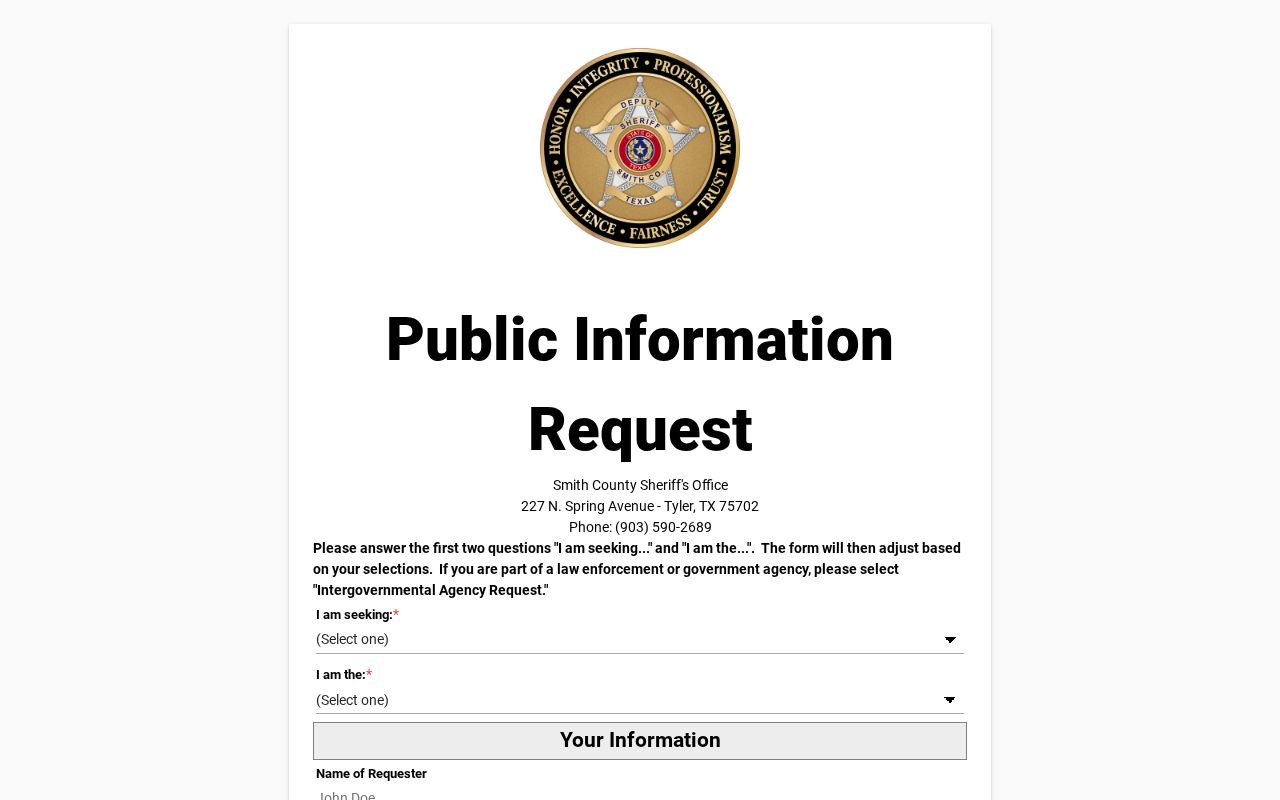
If the precise legal status matters, retain the county response and the related clerk document. Use a certified copy when the receiving process requires one. Note: A current search timestamp helps explain later changes in portal content or custody status.