
No Smith County 24-Hour Feed
No official Smith County page identified during the county source review is labeled a recent-release feed, a released-inmate list, or a rolling 24-hour list. The Smith County public portal combines jail and court access, while the Sheriff routes visitors to Odyssey Public Access. Those systems can help locate a person or case. Neither source publishes a guaranteed 24-hour window, refresh schedule, released-booking retention period, or photo policy.
This matters when the question is who left custody today. A live jail result is built around present custody, not a permanent list of past releases. If a name vanishes, that change alone does not show whether the person walked out, moved from Central Jail to North Jail, entered an overflow jail in another county, or transferred to TDCJ, federal, or immigration custody. The actual book-out entry and release disposition settle that issue.
Check Smith County Same-Day Releases
Begin with the official county channels and keep the identifiers attached to the correct person. Similar names are common. A booking number, case number, date of birth when lawfully shown, and approximate booking date make later confirmation more precise. For a broader named-person search across custody systems, use the Smith County released inmate search.
- Search the county public portal and Odyssey by the most exact name or available identifier. Record the access time and save the booking or case number shown.
- Open the linked criminal case. Look for a bond order, dismissal, judgment, sentence, commitment, or another order that may explain why custody changed.
- Call the jail at 903-590-2800. Ask whether the person booked out, transferred, moved between jail components, or remains under a record not visible online.
- Use the Smith County records request form for the book-in and book-out timestamps, release disposition, and transfer destination.
- If the record names a receiving system, continue there. Use TDCJ for state custody, BOP for federal custody, or ICE ODLS for immigration custody.
The court record and jail record answer different questions. A judge's order may provide the authority for release, yet it does not prove the moment the person physically left the jail. The jail's book-out record supplies that time. When both are available, compare the case number, charge, order date, and custody timestamp rather than treating either screen as a complete release certificate.
Smith County Release Record Fields
Because the dynamic portal did not render consistently during research, its current display fields cannot be promised. The table lists the fields to request from the custodian, not fields guaranteed to appear on a public 24-hour list. Asking for named data elements prevents a vague request and helps distinguish release from transfer.
| Field | What it establishes |
|---|---|
| Name, aliases, booking number | Connects the event to the correct booking and reduces mistaken identity. |
| Book-in and book-out timestamps | Shows when Smith County custody began and when that booking ended. |
| Housing facility | Identifies Central Jail, North Jail, or another component tied to the record. |
| Charges and holding authorities | Shows why the person was held and whether more than one agency had authority. |
| Bond amount and status | May connect the exit to surety, cash, or an approved personal bond. |
| Release disposition or authority | Distinguishes bond, time served, dismissal, transfer, or another stated basis. |
| Transfer destination | Names the next custodian when the person left Smith County but not custody. |
A booking photograph is a separate record item. If it is needed, identify the booking number and date and request the photograph separately. No official source reviewed promises that a photo remains visible after release. Likewise, the county's stated online criminal index coverage from 1995 concerns judicial records, not retention of jail-booking entries.
Smith County Portal Evidence
The official portal landing page shows why a person-specific search is the useful first step even though it is not a same-day feed. The Smith County portal source provides the combined county route captured below.
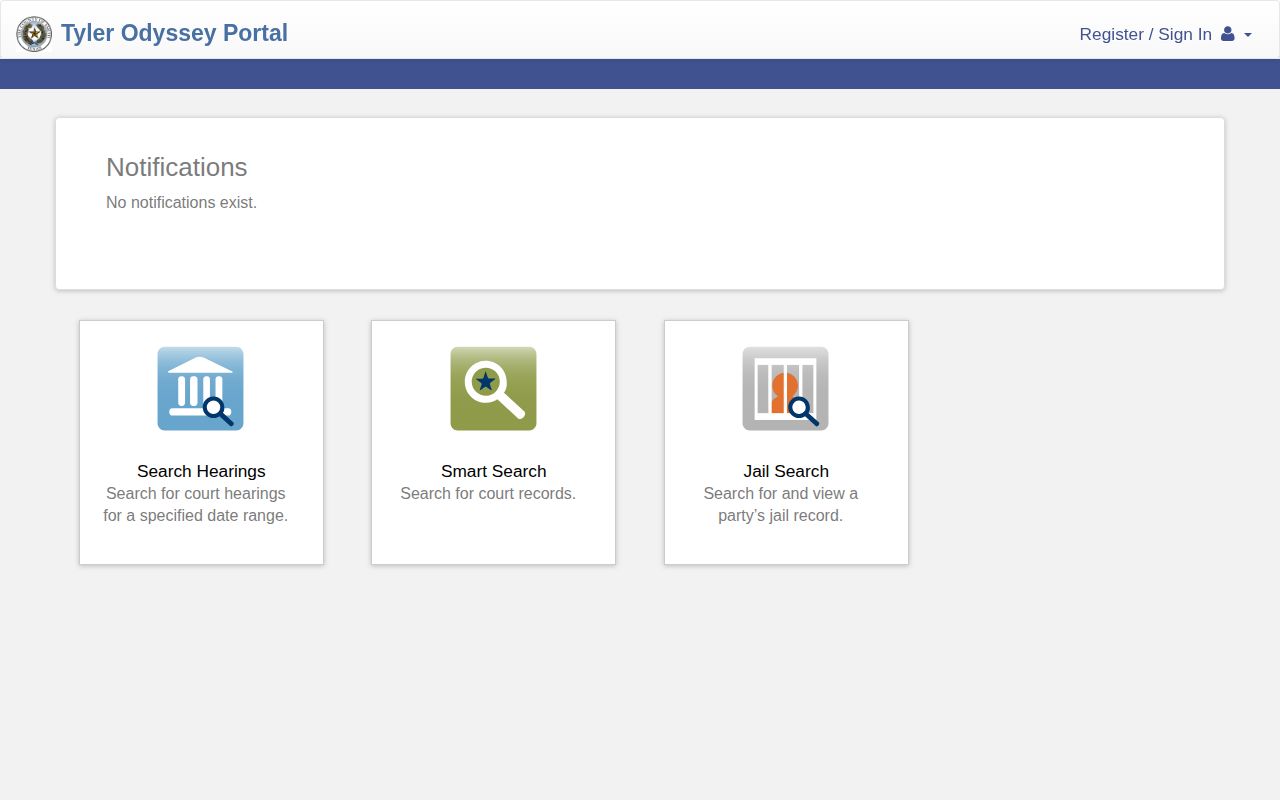
Use the visible search choices to locate the correct person or case, then confirm any status change through the jail record. A portal result may supply the key identifier, but an absent result still has several possible explanations.
Smith County Personal-Bond Release Steps
Smith County documents one distinctive same-day release route through its Pre-Trial Release process. A caller first contacts Pre-Trial Release. Staff conduct an interview and investigation, a judge decides whether to approve the personal bond, and the person signs required papers and pays the greater of $20 or 3 percent of the bond through an accepted form of tender. The jail is then contacted to begin its release work.
Judicial approval is not the same as a completed book-out. Jail processing follows the approval, and another hold can affect the result. A personal bond also means the criminal case remains pending. It is not a dismissal, acquittal, sentence completion, or end of every obligation. The case docket can verify the bond order, while the jail record verifies the physical exit.
The county's bond page was captured in the approved image set. Review the official bond instructions before relying on a payment or processing step.
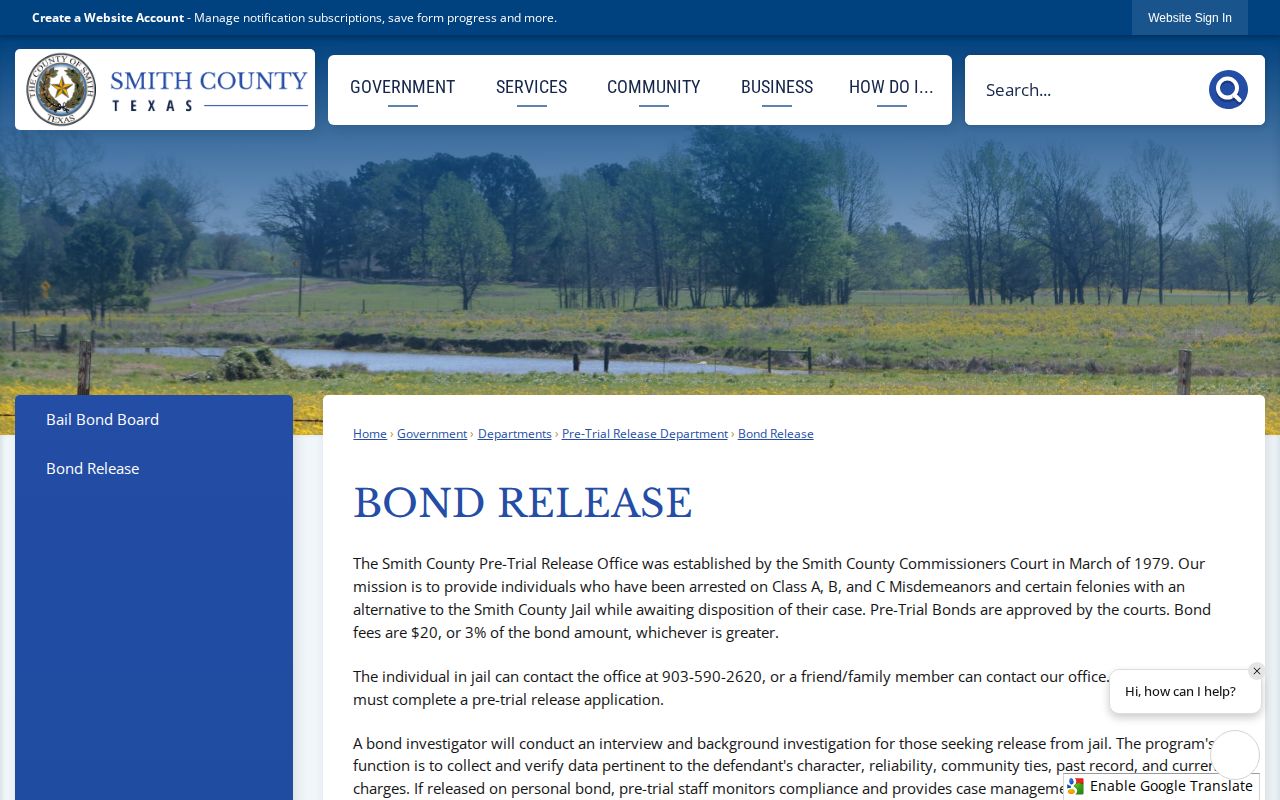
For a release that occurred through a different bond type, time served, dismissal, or transfer, request the exact disposition instead of applying the personal-bond steps to every booking.
Smith County Release or Transfer
Smith County operates Central Jail and the Low/Medium Risk Jail, commonly called North Jail. A move between them stays within the same county custody system. County budget material also states that overflow prisoners may be contracted to other Texas counties. That arrangement makes a disappearance from the local roster especially poor evidence of community release.
| Observed change | What to verify next |
|---|---|
| No current local result | Ask for the book-out event and release disposition. |
| Central to North movement | Confirm the housing change; it is not release. |
| Another county named | Search or contact the receiving county custodian. |
| TDCJ commitment | Use TDCJ Online Inmate Search and match the Smith County conviction. |
| Federal or ICE transfer | Use the BOP locator or ICE ODLS with the available identifier. |
The words “released from Smith County” can mean only that Smith County's custody ended. They do not necessarily mean the person returned to the community. Phrase the result according to the record: released on bond, released after time served, transferred to a named county, committed to TDCJ, or released to another authority.
Request Missing Smith County Book-Out Data
A written request is the official fallback when the public screens do not show enough. Smith County accepts nonjudicial public-information requests through JustFOIA. Supply the full name, aliases if known, booking or case number, and a narrow date range. Ask for existing records rather than asking staff to research a broad question.
Request the book-in timestamp, book-out timestamp, release date and time, release disposition, release authority, housing facility, and transfer destination. If the county identifies withheld or redacted material, the response should explain the handling under the applicable public-information process. A court document request goes to the clerk instead: the District Clerk holds felony records, while the County Clerk handles misdemeanor criminal records.
The wider Released Last 72 Hours process helps with a multi-day interval, but it is also a verification workflow rather than an official feed. For notification of a future county status change, check whether Smith County participates in Texas IVSS-Counties. Legacy VINE or VINELink materials should not be mistaken for the current statewide county service after the 2025 migration.
Note: Record the date and time of each search because portal content, custody status, and notification data can change.